

Haldex AWD Systems Explained: Servicing, Faults and Maintenance
Is your car fitted with four-wheel drive? You might have a Haldex system working behind the scenes to help keep you on the road. But what exactly is it, how does it work, and what happens if it goes wrong?
Four-wheel drive (AWD) can make a real difference when you’re accelerating on a wet road, driving on a muddy track or tackling a slippery winter morning. But like any other part of your vehicle, the system needs looking after.
At CCM Garages, we believe that understanding your car helps you make better decisions about its maintenance. So, here’s our guide to Haldex AWD systems, the warning signs to look out for and how to help keep yours working as it should.

What is a Haldex system?
A Haldex system is a type of electronically controlled, on-demand all-wheel-drive (AWD) system.
It’s fitted to many vehicles across the Volkswagen Group and other manufacturers, including selected Volkswagen, Audi, SEAT, Škoda and Volvo models.
Unlike a traditional four-wheel-drive system that may mechanically drive both axles continuously, a typical Haldex system can adjust how much power is sent to the rear wheels according to driving conditions.
On most Haldex-equipped cars with a transverse engine, the front wheels provide the primary drive, while the system can engage the rear wheels when extra traction is needed.
The benefit? You get the everyday efficiency and familiar driving characteristics of a predominantly front-wheel-drive car, with additional traction available when conditions demand it.
How does a Haldex system work?
Think of Haldex as an intelligent link between the front and rear axles.
Here’s what happens when you drive:
- Your engine powers the car – Under normal conditions, engine power is delivered primarily to the front wheels.
- Your car monitors driving conditions – Electronic control systems use information such as wheel speeds, throttle demand, steering angle and vehicle stability data to assess whether additional traction may be needed.
- The Haldex coupling responds – An electronically controlled hydraulic system operates a multi-plate clutch inside the Haldex coupling. This allows the system to vary how much torque is transferred through the propshaft to the rear differential and rear wheels.
- Extra traction becomes available – If you accelerate hard, encounter a slippery surface or the system anticipates a loss of traction, it can increase engagement of the rear axle.
Modern systems can respond proactively, rather than waiting for substantial wheelspin to occur. The system continuously adjusts its operation according to the vehicle’s design and driving conditions.
When might you notice it working?
- Pulling away in the rain: Extra traction can help reduce wheelspin.
- Accelerating out of a junction: The rear wheels can help put engine power onto the road.
- Driving on slippery or loose surfaces: AWD can help maintain forward progress when grip is limited.
- On everyday journeys: You may not notice the system working at all.
It’s worth remembering that AWD doesn’t make your car immune to slippery roads. Your tyres remain the only point of contact with the road, so tyre condition, tread depth and sensible driving are still essential.
Why does Haldex maintenance matter?
Like many modern vehicle systems, Haldex combines mechanical components, electronics and hydraulics. All three need to work together correctly.
The coupling uses specialist fluid, and depending on the system, a pump generates the hydraulic pressure needed to engage its clutch pack.
Over time, the fluid can deteriorate or become contaminated. Clutch material and other debris can also build up in the system. In some designs, this can restrict the pump’s pickup strainer and reduce its ability to operate properly.
If the pump cannot generate the required pressure, the coupling may not engage properly. Your car could continue to drive normally in everyday conditions but effectively lose its rear-wheel-drive assistance when you need it most.
What does a Haldex service involve?
The exact procedure depends on the vehicle and Haldex generation, but a thorough service may include:
- Fluid replacement: Draining the old fluid and refilling with the correct specification.
- Filter or strainer inspection: Checking and cleaning or replacing components where the design allows and the manufacturer specifies.
- Pump inspection: Checking for contamination, damage or signs of poor operation.
- Leak checks: Inspecting the coupling, seals, connections and surrounding driveline components.
- Electronic diagnostics: Checking for fault codes and assessing system operation where appropriate.
- Operational checks: Using suitable diagnostic tests and other checks to confirm the system is functioning correctly.
Not every Haldex system has the same filter arrangement, and not every service requires the same procedures. The correct approach depends on the manufacturer’s requirements for your particular vehicle.
A Haldex service isn’t necessarily just an oil change. Understanding the condition of the pump, fluid and associated components can be just as important as replacing the fluid itself.
How often should Haldex fluid be changed?
There isn’t one universal service interval for every Haldex-equipped vehicle.
The recommended interval depends on the make, model, year, system generation and manufacturer’s maintenance schedule. Some vehicles have specific time or mileage requirements, while service recommendations can differ between models using similar technology.
If you’ve recently bought a used AWD vehicle, it’s worth checking whether the Haldex service history is documented. If there’s no clear record of previous maintenance, ask a garage to check the requirements for your vehicle and advise on the next steps.
Don’t assume that because your car has relatively low mileage, its Haldex system won’t need attention. Time, operating conditions and previous maintenance can all be relevant.
Warning signs your Haldex system may have a problem
Haldex faults aren't always immediately obvious. Some vehicles can continue to drive quite normally even when the rear axle is no longer receiving the expected torque.However, there are several signs worth paying attention to.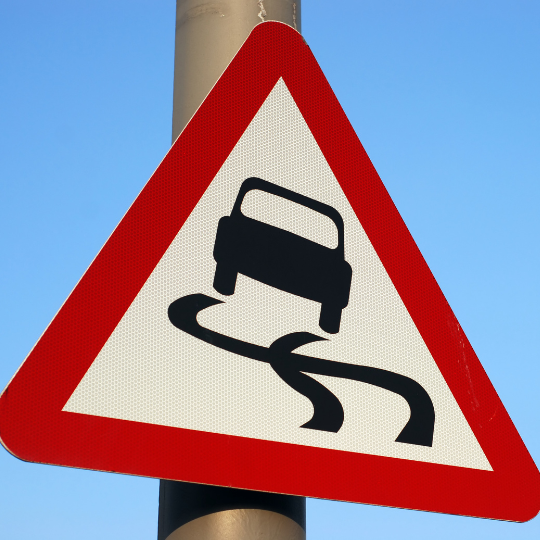 |
Loss of traction If your car spins its front wheels more readily than expected under acceleration, particularly in conditions where it previously maintained grip, the AWD system may not be operating as intended. Of course, tyres and road conditions can also cause wheelspin, so this symptom alone doesn't confirm a Haldex fault. |
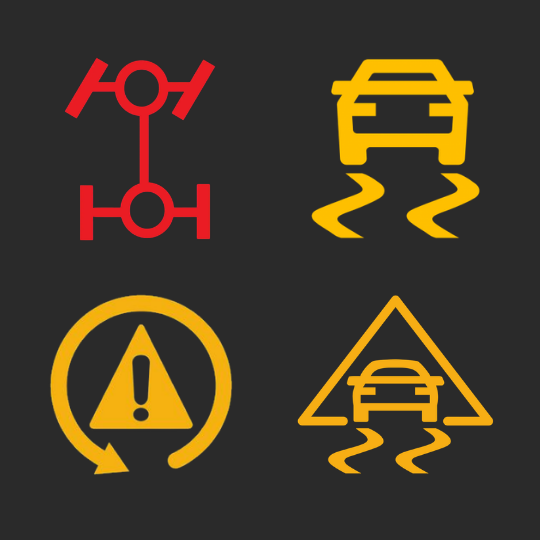 |
An AWD or drivetrain warning Some vehicles display a four-wheel-drive, drivetrain or stability control warning when a fault is detected. Others may store fault codes without immediately displaying a warning to the driver. Never ignore a persistent warning light. Have the vehicle checked to establish what's causing it. |
 |
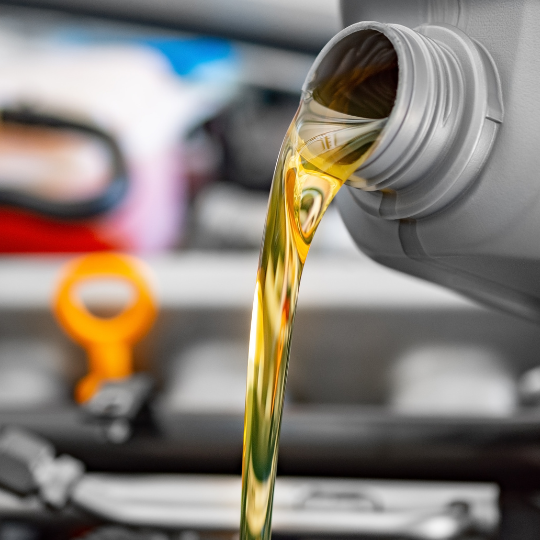
Unusual noises or vibrations Whining, humming, knocking or vibration from the rear drivetrain could indicate a problem with the coupling, pump, differential, propshaft or another component. These symptoms aren't exclusive to Haldex faults, so a proper inspection is needed to identify the cause. |
 |
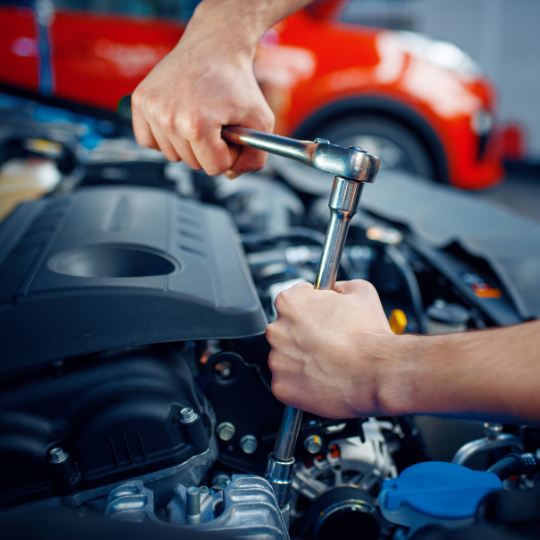
Fluid leaks Oil around the coupling or rear differential should be investigated. A leak may lead to an incorrect fluid level or indicate a problem with a seal or housing. |
 |
A fault discovered during servicing A diagnostic scan may reveal stored AWD faults, pump-related issues or communication problems even when you haven't noticed any obvious symptoms. This is one reason preventative maintenance is worthwhile: a system can develop a problem before it becomes obvious during everyday driving. |
If you suspect an AWD fault, don't deliberately try to provoke wheelspin or test the system on a slippery surface. Arrange a professional inspection instead.
Five top tips for looking after your Haldex system
Can a Haldex fault be diagnosed without replacing parts unnecessarily?
Yes. A systematic diagnostic approach is important because several different problems can produce similar symptoms.
For example, a loss of rear-wheel drive could be caused by a pump fault, a restricted strainer, an electrical problem, a control-system issue, a hydraulic fault or a mechanical problem within the coupling or wider drivetrain.
Simply replacing the pump or changing the fluid won’t necessarily resolve the underlying issue.
A proper investigation can include reading fault codes, checking relevant live data, testing electrical supplies and connections, assessing pump operation and carrying out the appropriate system tests for the vehicle.
The aim is to identify the actual cause before recommending repairs.
Need your AWD system checked?
Your Haldex system may work quietly in the background, but it plays an important role in how your vehicle puts its power onto the road.
Keeping up with the correct maintenance schedule and investigating warning signs early can help protect your investment and maintain the performance you expect from your car.
At CCM Garages, our approach is to understand the problem, carry out the appropriate checks and explain our findings clearly, so you can make an informed decision about your vehicle.
Whether you’re unsure when your Haldex was last serviced, have noticed a warning light or want to investigate a possible loss of traction, we’re here to help.
Get in touch with CCM Garages to discuss your vehicle’s AWD maintenance or diagnostic requirements.
Contact Us to find out more or find your local CCM site.
Drive with confidence. Keep your car properly maintained.



© CCM - 2026
